Monday, April 15, 2013

George Jackson - I'm Gonna Wait (Hi 2212)


I'm Gonna Wait

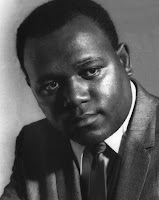
George Jackson, in so many ways the pure essence of Southern Soul, has left us. I don't think you can say enough about this man's importance in the development of this music. Known primarily for his incredible songwriting skills, his career as a performer is often forgotten. This emotional gem we have here was released by Willie Mitchell as a B Side twice, once 1n 1967 and again in 1972... that's how good it is. You can feel George put his heart and soul on the line, just as he did with everything he touched. From Memphis and Muscle Shoals, to his longstanding position as the poet-laureate of Malaco Music, George Jackson's gentle genius defined what it meant to be a Soul Man.

He will never be replaced.
____________________________________________

There is an excellent overview of George's recording career over at Deep Soul Heaven, and re-printed below is an appreciation of him I wrote back in 2006:


My Desires Are Getting The Best Of Me

As the final installment of our 'fame fest', I thought we'd focus on the quiet genius behind so much great southern soul, George Jackson.

Born in B.B. King's Indianola, George grew up on the river in Greenville, Mississippi. When Ike Turner rumbled down Highway 61 from Clarksdale, the teenaged Jackson went to see him and showed him some of the songs he'd been writing. Ike was impressed, and brought George downriver to New Orleans to record at Cosimo Matassa's studio in 1963. His idol was Sam Cooke (as he was for most every other aspiring singer in those days), and the record they cut Won't Nobody Cha-Cha With Me was an attempt to cash in on the recent Cooke-inspired 'cha-cha' craze. Released on Turner's Prann label, the single sank like a stone.

Jackson next moved to Memphis, and placed a couple of novelty type singles with the Dot and Doro labels through local impresarios Dorothy and John Hester. Also around this time, he recorded under the first of many pseudonyms, Louie Palmer, for Earl Forrest's Bootheel label in 1965. George's best friend in Memphis, Dan Greer, soon became his songwriting partner, and they formed their own short-lived label, Gre-Jac the following year. The label's only release, You Didn't Know It But You Had Me, was by 'George & Greer', and didn't sell much.

As legend has it, George lived in a big old house in Memphis and the landlady let him use her broken-down piano to write songs. He and Dan would spend most of every day working on material, and they were soon noticed by Quinton Claunch and 'Doc' Russell over at Goldwax Records. Claunch offered Jackson a contract as a songwriter for Goldwax, and one of the first tunes he contributed to the label, Old Friend (You Asked Me If I Miss Her) (Goldwax 312) became a local hit for the great Spencer Wiggins in 1966. In what was apparently part of the deal, Goldwax 313 was a re-release of the George & Greer single. It didn't sell this time either.

George (and Dan) took to their duties at Goldwax, and soon had artists like Wiggins, James Carr, Willie Walker, and The Ovations gathered around the old piano as well, rehearsing the songs they wrote for them. George was a particular fan of Ovations' lead singer Louis Williams, and worked with the group often (although it remains unclear to me if he was ever actually a member). Goldwax didn't have its own studio, and would record whenever and wherever they could get the best deal. It was Dan and George's job to drive the singers to the recording dates, armed with whatever it took (like a bottle) to get the best performance. Jackson became the de-facto producer as well, often running through take after take until he was satisfied with the song. If George was happy, Quinton Claunch was happy too.

George began working with Memphis legend Willie Mitchell around this time, and released So Good to Me on Hi in 1967. Mitchell was able to place a single with Decca the following year, under yet another name - 'Bart' Jackson. A demo George had recorded, Cold Cold Love was released on the Public label in 1968, but he had nothing to do with it.

Fame was one of the studios that Claunch had been using off and on, ever since James Carr's earliest sides for Goldwax in 1964. He began sending Jackson down there as well, along with Spencer Wiggins and his brother Percy. They recorded some great material, but Claunch folded the label before it was released. Rick Hall wasted no time, and signed George up as the new staff songwriter at Fame in 1969. Rick also recorded him as an artist for the house label, and today's cool record is The B side of his first Fame single, Find 'Em, Fool 'Em, And Forget 'Em (now up on the A side). Recorded right around the time the 'second' rhythm section left, I'm not sure if it's them or the 'Fame Gang' backing him up, all I know is that it's great! Co-written with his new running partner Raymond Moore, George is at his best here spinning yet another tale of the vagaries of love. His next (and last) single for the label, That's How Much You Mean To Me, would result in his first chart appearance when it cracked the R&B top 50 in the summer of 1970. Hall had secured the rights to the unreleased Goldwax recordings at this point, and when he put out Spencer Wiggins' rendition of Jackson composition Double Lovin' later that year it broke the top 50 as well (Spencer's only chart hit).

When MGM sent floundering boy band The Osmonds down to Fame in 1971, they took a song George had originally written with the Jackson 5 in mind, One Bad Apple, all the way to number one on the pop charts. The record would spend five weeks there, and become an international success (it even made #6 R&B!). The Osmonds were on top. Ironically, their follow-up single would be a cover of Double Lovin', which would make it to #14 pop (Wiggins' original hadn't even 'bubbled under' the Hot 100). MGM would release a George Jackon single on their Verve subsidiary, I Found What I Wanted, later that year, but nothing much came of it.

1972 saw George back in Memphis, working with Willie Mitchell at his Royal Studio. Top 40 R&B hit Aretha, Sing One For Me would become his second Hi release, and George's last chart entry. Another great record, Let Them Know You Care would follow in 1973, but it didn't sell. the B sides of both of these singles, I'm Gonna Wait and Patricia, respectively, are simply wonderful in their own right, and reflective of the phenomenal work that was going on at Royal in those days.

Although George's main focus remained on his songwriting (George Soulé's Get Involved and Clarence Carter's Too Weak To Fight are but two examples of the great work he was doing at the time), MGM continued to release singles on him through 1974. The company also backed a label he had formed with his old partner Dan Greer, Sounds Of Memphis. Back recording former Goldwax artists like The Ovations and Spencer Wiggins, they were producing some great music, but times had changed, and the records weren't selling. MGM promo man Eddie Ray believed in George's talent (even after his employer had moved on), and in addition to placing one single with Chess in 1975, he put out what many consider to be George's finest record, Talking About The Love I Have For You/I Don't Need You No More on his own ER label in 1976.

By the late seventies, George had left Fame and began working with cross-town rivals Muscle Shoals Sound. There was one 'disco' single released on the studio's short lived record label, but the main work was going on behind the scenes. Unknown to the general public, Jackson was hunkered down with what may just have been the best band in the world recording demos of the songs he was writing. The resulting tapes became legendary, and remained unheard for over twenty years (more on that in a moment). His work from this period included blockbusters like Bob Seger's Old Time Rock & Roll in 1978, and James Brown's It's Too Funky In Here in '79.

As we've mentioned before, Tommy Couch and Wolf Stephenson up at Malaco heard George's demos and selected a couple of tunes for their new signee Z.Z. Hill's second album, Down Home in 1981. Jackson composition Down Home Blues, which Malaco refused to release as a single, was just huge and helped make the record the largest selling 'blues' album in history. When they released George's Cheatin' In The Next Room as a single from the album in early 1982, it took off, spending five months on the R&B charts. On the basis of such unprecedented sales, Malaco hired Jackson as their new staff songwriter later that year. He still holds that position today, and has written countless fantastic songs for the label's soul stalwarts like Denise LaSalle, Little Milton, Bobby Bland and Johnnie Taylor (the Jackson penned Last Two Dollars was a gigantic hit in 1996, and helped make Taylor's album Good Love Malaco's biggest seller ever).

George himself hadn't recorded much in the eighties, except for a few singles on local southern labels like Crosstown and Washataw. He recorded a duet with old favorite Louis Williams for Happy Hooker in 1985, and did some work with good ol' Senator Jones, who had moved his Hep' Me operation to friendlier quarters in Jackson, Mississippi in the early nineties. The Hep' Me material has been made available again on a Black Grape CD, Heart To Heart Collect.

Malaco had bought Muscle Shoals Sound lock, stock and barrel in 1985. George's demo tapes were included in the sale along with hundreds of other items. When Grapevine Music became the UK licensee for Malaco around the turn of the century, they began an ambitious search of their 'vaults'. Finding Jackson's Muscle Shoals demos intact and sounding just as good as the day they were recorded must have been like finding the Holy Grail. They have released two excellent CDs of the material so far, and you should buy them. They are superb.

George Jackson is truly a living legend, and one of the most 'unsung' of the heroes of southern soul. The BMI Reperoire database lists him as the writer or co-writer of 435 songs.

He's A Man And A Half.

May He Rest In Peace.

Monday, April 01, 2013

Roosevelt Jamison 1936-2013

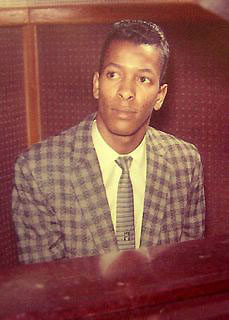
Like many of you, I was first introduced to Roosevelt Jamison in the pages of Peter Guralnick's seminal Sweet Soul Music: Rhythm & Blues and the Southern Dream of Freedom. The story of him working with Gospel groups in a back room at the Blood Bank where he worked, of his cutting a few raw demo tapes of songs he had written with a couple of those singers, and knocking on the door of Goldwax owner Quinton Claunch in the middle of the night with those singers (who just happened to be O.V. Wright and James Carr) in tow, and changing the course of history in the process... the tale of this visionary poet who may just have written the greatest Love Song of all time going on to become Carr's manager, confidant and, in many ways, soul-mate, helped me to understand the importance of this man in the history of this music. It is hard to imagine Memphis Soul without him.

When Preston Lauterbach and I started up the O.V. Wright Memorial Fund in 2008, we went out of our way to find Roosevelt and bring him on board with Willie Mitchell and the rest of the crew. Once we finally tracked him down, he agreed to come have breakfast with me and talk things over. As he began to speak of those days, of James Carr showing up on his doorstep broke and hungry, and quite literally out of his mind, he broke down and started to cry at the memory of it. This was the first time I had met him, and I began to truly understand the depth of spirit and emotion that this man, and the music he created, brought to this world of ours. From that moment on, I became his biggest fan.

As part of the festivities in Memphis surrounding the O.V. Wright Memorial Dedication, I had arranged for a luncheon at the Rendezvous that would bring Roosevelt and Quinton Claunch back together, just like the night they had spent on the living room floor listening to those tapes all those years ago. As it turned out, Quinton wasn't feeling up to it, but Roosevelt came and introduced everyone to his wonderful wife Linda, who was kind enough to have made these beautiful keepsake laminated bookmarks for the occasion, emblazoned with the lyrics of Jamison's song of songs... all of us who were lucky enough to be there that day will treasure them forever.

I kept in touch with Roosevelt over the years, and we talked often of those days. Here was a man who had been there and back, and had the stories to prove it. In the summer of 2011, he was diagnosed with Brain Cancer and, although he was weak, he would still answer my call and speak with me from his hospital bed. Miraculously, Roosevelt got up out of that bed, and the cancer seemed to go into remission. That Fall, he would receive a 'Note' on Beale Street, and be honored by the City of Memphis by re-naming the street where he lived 'Roosevelt Jamison Road'. He was finally getting some home-town recognition... but, sadly, the Cancer had returned. When John Broven and I got into town on the Road Trip last August, Roosevelt was the first person I called. He and Linda were kind enough to invite us out to the house and, although things didn't look good at first, with Linda's help we were finally able to make it happen...

...that luncheon with Quinton and Roosevelt we had been angling for all along. It was truly a privilege and an honor to have been able to bring these two historic figures back together one last time.
I will never forget it.
As I drove Roosevelt home from the restaurant that afternoon, somehow I knew it would be the last time I would ever see him... I told him that no matter what happened, he had written a song that will live on forever. Tears filled both of our eyes, as he turned to me and answered, "I know it."


That's How Strong My Love Is

Wednesday, March 27, 2013

Ernie K-Doe - Reaping What I Sow (Instant 3264)


Reaping What I Sow

On the way back from Memphis on the Road Trip last August, John Broven invited me to take part in a discography project he had been working on for a few years with John Ridley and a couple of other major UK record collectors. The project, he said, involved New Orleans music, in particular the music cut by Cosimo Matassa at his studio on Governor Nicholls Street. I am, as you know, a big fan of that music, and was fascinated by what he had to say. I immediately agreed to come on board.

The project had to do with deciphering the numbers that Cosimo had begun (in October of 1960) stamping on virtually every 45 he cut, mastered or pressed at the studio, numbers we were soon referring to as 'The Cosimo Code'. Broven and Company had identified hundreds of these 45s by the time I got there, with more being found every day. My job was to ready the project for the internet, so we could open it up to the public.

As I got further into it, I began to appreciate the sheer magnificence of this music we were talking about. Again and again, I would be blown away by some obscure record I had never heard. This jaw-dropping B-side we have here today being a case in point. I mean, everybody knows about the wild and crazy side of the self-styled R&B Emperor of New Orleans, but this deeply emotional one comes as a bit of a surprise, and offers a glimpse into another side of K-Doe that we may have overlooked. Written by the Emperor himself, it was the last record he cut for Instant before heading off to Houston and signing with Don Robey. Check out that great guitar, and those ethereal background vocals... just hypnotic stuff.

It was records like this one that convinced me of the importance of the project, and fired me up to get the job done. And so, after many months spent working behind the scenes, I am proud to announce that there is a new website in town: cosimocode.com


Come on over and Join the Team!

Monday, December 31, 2012

Gone On

Fontella Bass & Bobby McClure - You'll Miss Me (When I'm Gone)(Checker 1111)


You'll Miss Me (When I'm Gone)

The daughter of Gospel great Martha Bass (a member of the fabled Clara Ward Singers), Fontella Bass came up singing and playing piano in various St. Louis Churches. By the time she turned twenty, she had 'crossed-over', and was working the keyboards for local Blues icon Little Milton Campbell, in a band headed by saxophonist and arranger Oliver Sain. In late 1961, Leonard Chess picked up the master of a single by that band from Campbell's Bobbin label, and So Mean To Me would become Milton's breakthrough hit, climbing to #14 R&B in early 1962.

Sain would leave to form his own 'orchestra' shortly after that, taking Fontella and vocalist Bobby McCLure with him. The band would continue to record for Bobbin, and release two singles under Fontella's name. The first of these, the great Brand New Love, shows her fully formed, both as a singer and pianist, and already a force to be reckoned with. She would go on to cut two more singles (with Tina & The Ikettes) for Ike Turner's local imprints in 1963.

None of this was lost on Leonard Chess, who brought the whole shooting match to Chicago and cut the timeless Sain composition, Don't Mess Up A Good Thing , in February of 1965. After Chess' A&R man Roquel 'Billy' Davis suggested that Sain put in some Uncle Willie, it just ate up the charts, going all the way to #5 R&B, then breaking into the Pop Top 40. This was the record that set the stage for what was to follow, with the label's St. Louis connection about to come full circle.

Phil Chess had hired sax man Gene Barge as his musical director in 1964, and he set about putting together a rhythm section to rival any in the industry, one that featured Sonny Thompson, Louis Satterfield and Maurice White. Billy Davis, meanwhile, knew a thing or two about songwriting, and worked closely with Chess staff writers Carl Smith and Raynard Miner (along with staff arranger and copyist Phil Wright) to develop the 'hook' that would send Little Milton straight to the top of the R&B charts for three weeks in the Spring of 1965 with We're Gonna Make It. Crossing over once again into the Pop Top 40, I'm sure Leonard Chess felt that his faith in Davis had paid off, and he now had an R&B division that could compete with the records Billy's former partner Berry Gordy was making in Detroit.


Davis next turned his attention to Fontella and Bobby, and decided to cut their follow-up single with the Chess house band, rather than with Oliver Sain, resulting in this awesome 45 we have here today. Released to lukewarm sales in the Summer of 1965 (limping to #27 R&B), Davis knew what had to be done. I think he saw the sheer energy and star power in Fontella, and realized that she deserved better. Once again working up the hook with Smith and Miner, Davis brought her down to South Michigan Avenue and cut Rescue Me in one take on September 2, 1965. To say that this song was a hit would be an understatement. Yes, it spent a month at the top of the charts that Fall, but it is one of those songs that you still hear all over the place today... one of those songs that will never die.

Bass felt she never received fair compensation for that, and she was right. Her relationship with Chess soured because of it and, although she would chart four more times for the label over the course of the next year, by 1967 she was gone. Moving to Paris, she recorded some Jazz material with her then husband Lester Bowie's Art Ensemble of Chicago, before returning to the States and signing with Stan Lewis' Paula label in 1971. Although the quality of her material remained strong, none of these records dented the charts. After a top shelf release on Epic, Soon As I Touched Him, failed to make any noise as well, Fontella walked away, and went back to singing in Church.

Among the Gospel material she later recorded were two albums she made with her mother, Martha Bass and her brother, David Peaston; From The Root To The Source and Promises - A Family Portrait Of Faith.

David Peaston died on February 1st. Fontella Bass left us last Wednesday, December 26th.

May God Rest Their Souls.

Inez Andrews - Lord Don't Move The Mountain (Songbird 1203)


Lord Don't Move The Mountain

When James Cleveland heard the 22 year old Inez Andrews sing one night, as a substitute for Dorothy Love-Coates in the Gospel Harmonettes, he knew she was something special. He would go on to recommend to his mentor, Queen of Gospel Albertina Walker, that she become a member of The Caravans. The recordings they would make for Savoy's Gospel label over the next several years form the basis of Gospel Music as we know it today. Once Shirley Caesar came aboard in 1958, The Caravans took that music to the next level, just bringing down the house wherever they went. It was Andrews' 'sermonette' on Gospel standard Mary Don't You Weep that made her a household name among Black people in America. As she told Anthony Heilbut; "I know I sang hard... Sam Cooke did a program with us in Los Angeles and screamed so much to keep up, he got sick. He said, 'Girl, you the only singer ever put me to bed!'"

With a voice as big as the whole world, she left The Caravans and formed her own group, The Andrewettes, in 1960. Dubbed The Gospel Songbird, she would rejoin The Caravans briefly in the mid-sixties, before being signed as a solo act by Don Robey, who offered to name his new Peacock subsidiary, Songbird, after her. After Robey sold out to ABC, they brought in the aforementioned Gene Barge to produce an album on her that went straight to number one on the Billboard Gospel LP chart. When they released this monster title track from the LP as a single, it was so huge that it crossed over onto the R&B chart as well, cruising to #48 in the Spring of 1973...

Bishop Inez Andrews, gone home December 19th.

Jimmy McCracklin - Head Over Flip (Imperial 5892)


Head Over Flip

Oakland Blues man Jimmy McCracklin had been making records for a variety of labels since 1945, but it wasn't until he broke things wide open for Leonard Chess with The Walk in 1958 that he got some national recognition, helped in large part by his appearance on the visionary Dick Clark's American Bandstand. After some more label-hopping (including a stop at Hi!), the seasoned McCracklin decided to open his own label, Art-Tone back on the West Coast, and send Just Got To Know all the way to #2 R&B in 1961. Despite the great Christmas Time later that year, and another top twenty R&B hit in early 1962, Jimmy decided to fold Art-Tone and sign with Imperial. This cool B-Side represents his first release on the label. He would go on to hit big for Imperial in 1965 with the #7 R&B smash, Think, and continue to cut for their Minit subsidiary until 1970. After a great 1971 Stax LP, his recording career kind of wound down, but Jimmy would become a mainstay of the Blues circuit, and an influence on generations of musicians.

Dick Clark died on April 18th. Jimmy McCracklin left us December 20th.

One of McCracklin's most memorable compositions, however, is a song he never recorded. It was Initially written for his running partner Lowell Fulson, who took it to #5 R&B in January of 1967. When Stax picked up on it a few months later, Otis & Carla took Tramp even further, all the way to #2 R&B (and #26 on the Hot 100) during the long hot Summer of Love. The bass player on that incendiary record, of course, was a young man by the name of Donald 'Duck' Dunn.


Out of all the people we lost this year, I think Duck's death hit me the hardest. It still just doesn't seem possible that he is no longer with us. The immaculate bottom he held down on hundreds of classic era Stax recordings seems now somehow taken for granted... I don't think any of us expected to lose him so soon.

His passing is just such a game-changer, you know? I mean, with Al Jackson, Jr. gone now almost forty years, I'd venture to say that there are very few of us left who saw the original M.G.'s live, and there was always that hope of one more reunion (albeit with the under-appreciated Steve Potts) down the road. Sadly, that is no longer the case, and the 'dynamic duo' of Cropper & Dunn is no more...


I've Got Dreams To Remember

They just don't come any better than that, folks. Duck passed away in his sleep on tour in Japan on May 13th... We Will Miss You, Soul Man!

Please join me in saying goodbye to these other Greats who have gone on before us to Glory here in 2012:


May They Rest In Peace.

Monday, December 17, 2012

The King Cole Trio - The Christmas Song (Merry Christmas To You) - Capitol 90036


The Christmas Song (Merry Christmas To You)


Hi folks... as I've mentioned in the past, this is the one that just slays me every year. As you may know, I'm a huge fan of Johnny Mercer, not only as a composer and singer, but as a founding father of the music industry as we know it today. When he got the idea to form Capitol Records in 1942 ("So I could hear somebody else besides Bing Crosby on the radio," he said), he went out of his way to record quality artists that he felt weren't getting a 'fair shake'.

In 1943 he signed the all black King Cole Trio, a gamble which promptly paid off for the label, with the Trio racking up three number one R&B hits within a year. The trend continued, with Nat Cole's velvet vocals laid over the tasteful accompaniment of Oscar Moore on guitar and Johnny Williams on double bass keeping The Trio in the top five throughout the War Years. In the Summer of 1946, they were riding high with the seminal (Get Your Kicks On) Route 66 climbing to the number three slot during an eleven week stay on the charts. It was during that period that Capitol sent them into the WMCA Studio in New York to create what may just be the most enduring Christmas song of all time. Cole was unhappy with the first 'trio-only' recording (which remained unreleased for over forty years), and begged Mercer to let him re-cut it with a 'String Choir' that August.

He was right, of course, and when Capitol released it around Thanksgiving, it went straight to #3 on both the Pop and R&B charts, and remained a top-seller for them for the rest of the decade. There was a copy on every jukebox in America, and more copies were pressed to meet the demand every December. As the industry began the switch to 45rpm vinyl in 1949, Capitol followed suit. This particular single we have here today is stamped '12-51', and carries the same matrix number (981) as that original 1946 78. Like I said, it just knocks me out, some 66 years after it was recorded.

CAPITOL 3561

The Christmas Song (Merry Christmas To You)

In August of 1953, Capitol brought Nat into their Hollywood studio to cut a more lavish version, this time with Nelson Riddle's orchestra. This would become the new holiday juke box release, and the Trio's rendition sort of faded away. In March of 1961, at the label's New York studio, Capitol cut what most consider to be the definitive stereo version, with an orchestra led by Ralph Carmichael. Once again, they would stop pressing the earlier release, and it is that 1961 recording that has become the standard that you still hear on the radio today...


"Although it's been said many times, many ways, Merry Christmas to you..." I hope Santa treats you good!